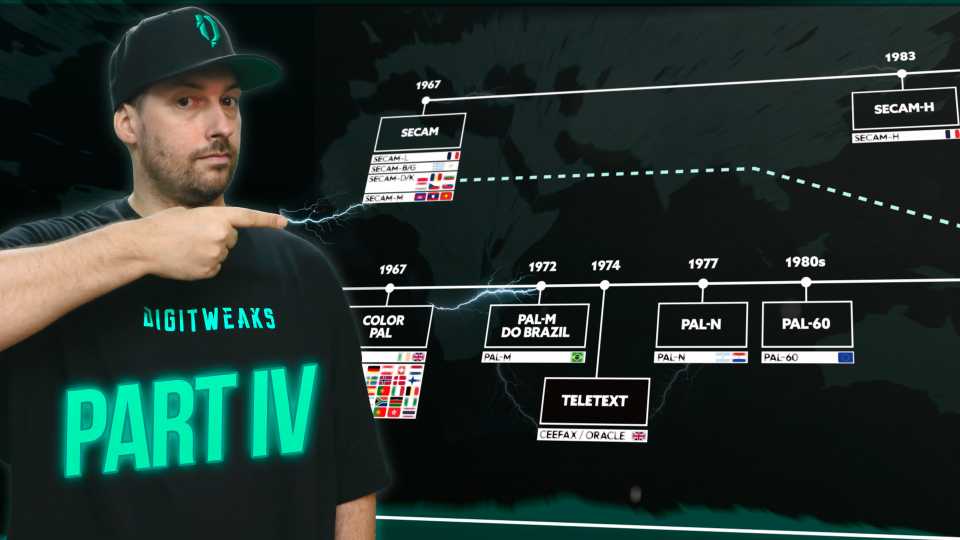
In this video, I break down the history of television standards in chronological order, focusing on how different regions developed and adapted their systems over time.
I go through the technical foundations behind TV standards, including line count, carrier frequency, and frame rate, and explain how color systems like NTSC, PAL, and SECAM were built on top of that structure. The television history's timeline starts with the introduction of NTSC in the 1940s, then moves into the arrival of color in the 1950s and the regional adjustments made in countries like Japan and Brazil.
From there, I cover the development of PAL and SECAM in the 1960s, along with their global adoption and the different variants used across Europe, Africa, and other regions. I also include hybrid systems like PAL-M and PAL-N, as well as technologies from the 1970s and 80s such as teletext, SCART connections, stereo audio, and compatibility formats like PAL-60.
The video continues with updates like SECAM-H, the transition from SECAM to PAL in Eastern Europe, and enhancements such as PALplus and early analog high-definition systems in the 1990s. Finally, I go over the shift to digital broadcasting in the 2000s and how it led to modern TV and streaming.
WATCH THE FULL SERIES (Evolution and Fun Facts of TV Standards): https://www.youtube.com/playlist?list=PL0uWrQY9KDdd3xG-BYoFy-3yNCSqyiyWS